For Research Use Only (RUO): This content is intended strictly for educational and laboratory research purposes. Products referenced on this site are not for diagnostic, therapeutic, or human/animal use.
Why Peptide Purity Grades Matter in RUO Research
When sourcing RUO peptides, the purity percentage listed on a product page and Certificate of Analysis is one of the most important specifications to evaluate. Values like 95%, 98%, and 99%+ appear on product pages and CoAs consistently — but understanding exactly what these numbers mean, how they are measured, and how they affect your experimental outcomes is essential for making informed purchasing decisions.
This guide explains peptide purity grades RUO research standards in plain terms — what each grade means, how HPLC quantifies it, and how to match the right purity level to your specific laboratory application.
What Peptide Purity Percentage Actually Measures
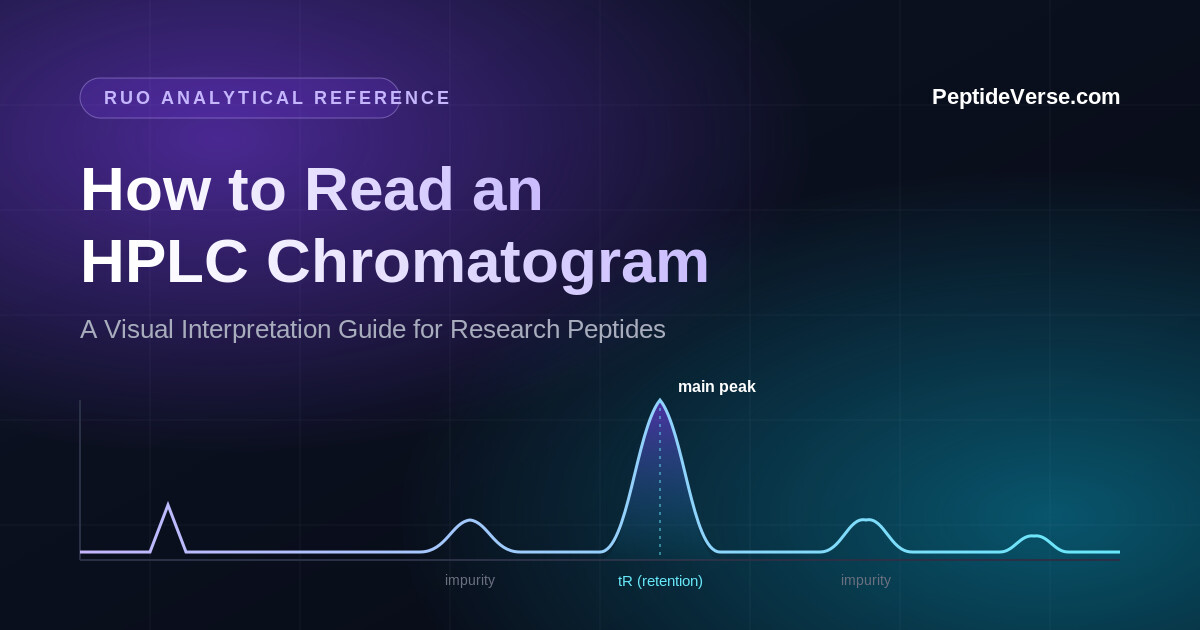
Peptide purity is most commonly determined by reversed-phase High-Performance Liquid Chromatography (RP-HPLC) with UV detection, typically at 214 nm or 220 nm. The purity percentage represents the area of the target compound’s peak as a proportion of all UV-detectable peaks in the chromatogram.
A peptide listed at 98% purity means that 98% of the UV-absorbing material in the sample is the intended compound. The remaining 2% consists of synthesis byproducts including truncated sequences, deletion sequences, oxidized variants, or other impurities generated during the manufacturing process.
It is important to note that HPLC purity reflects UV-detectable material only. Counter-ions, residual solvents, water, and certain inorganic impurities may not be captured by UV-based HPLC. Mass spectrometry is used alongside HPLC to verify compound identity independently of purity percentage.
For a full explanation of how these measurements are performed, see: How Peptide Purity Is Measured: HPLC, MS, and RUO Quality Specifications
Peptide Purity Grades Explained: 95%, 98%, and 99%+
95% Purity — Exploratory and Screening Research
A purity grade of ≥95% is the entry-level standard for most RUO peptide applications. At this grade, up to 5% of the sample may consist of impurities. This level of impurity is generally acceptable for:
- Preliminary screening studies where relative activity rather than absolute values is being assessed
- Structure-activity relationship (SAR) studies using large libraries where high-purity synthesis of every variant is cost-prohibitive
- Exploratory assay development where the protocol itself is being optimized
- Educational and demonstration purposes in controlled laboratory environments
Researchers should be cautious when using 95% purity peptides in sensitive binding assays, as impurities may compete with the target compound for receptor sites and introduce noise into dose-response data.
98% Purity — The Standard for Most Quantitative RUO Research
A purity grade of ≥98% is the most widely recommended specification for general RUO research applications. At this level, impurity content is low enough to avoid most sources of assay interference while remaining cost-effective for routine laboratory use.
Applications well-suited to 98% purity peptide purity grades RUO research include:
- Receptor binding assays and competitive inhibition studies
- Signaling pathway research and cellular assay work (non-clinical)
- ELISA development and immunoassay applications
- Analytical reference comparisons within the same lot
- Stability and storage condition studies
Most peptides available through PeptideVerse, including research compounds like BPC-157 10 mg and GHK-Cu 100 mg, are supplied at ≥98% purity with HPLC and MS verification.
99%+ Purity — High-Precision and Quantitative Applications
Peptides at ≥99% purity represent the highest grade commonly available for RUO research. At this level, impurity content is minimized to ≤1% of the total sample. This grade is recommended for:
- Quantitative mass spectrometry reference standards
- High-precision analytical assays where impurity interference would compromise data integrity
- NMR studies where spectral cleanliness is critical
- Absolute quantification studies requiring certified reference values
- Comparative studies where lot-to-lot purity variance must be minimized
How Impurities Affect Research Outcomes
Understanding what impurities are present in lower-purity peptides helps researchers anticipate potential data quality issues.
Truncated Sequences
Incomplete synthesis runs generate truncated peptides — shorter versions of the target sequence that lack one or more amino acids from either terminus. Truncated sequences may retain partial biological activity, leading to artificially elevated or blunted responses in binding assays.
Deletion Sequences
Deletion sequences result from missed amino acid coupling steps. Unlike truncated sequences, deletions can occur anywhere in the chain, producing variants with unpredictable structural and activity profiles.
Oxidized Variants
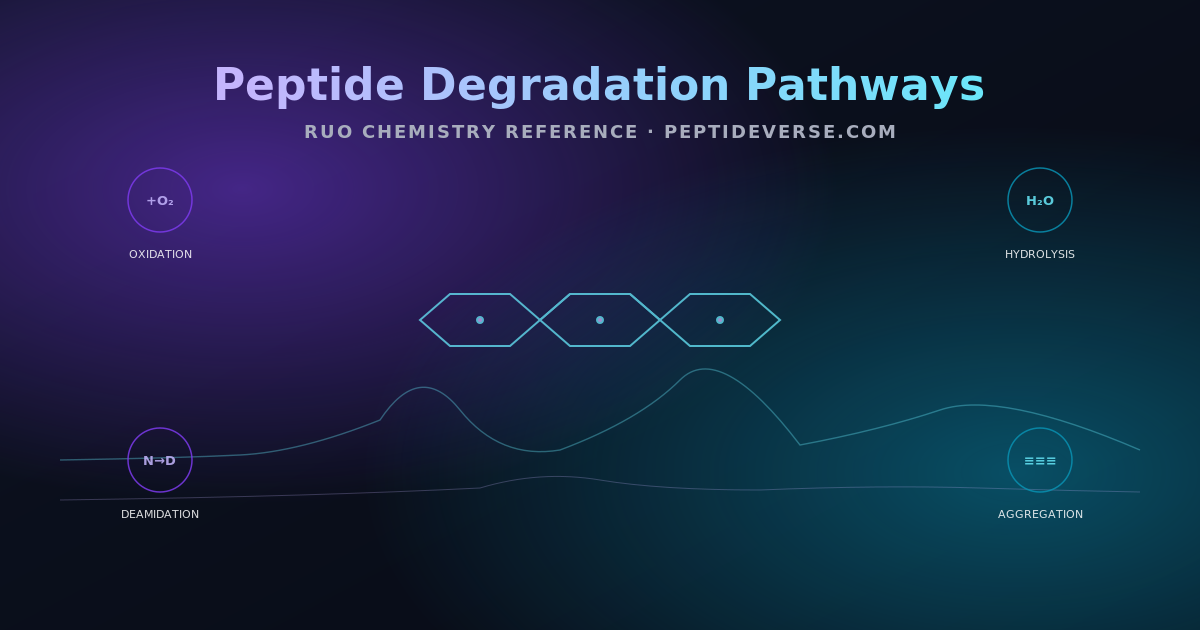
Methionine, cysteine, and tryptophan residues are susceptible to oxidation during synthesis or storage. Oxidized variants may behave differently from the target compound in assays that depend on specific side chain chemistry.
Selecting the Right Purity Grade for Your Study
Choosing among peptide purity grades RUO research applications comes down to matching the grade to the experimental sensitivity required:
- If your assay is sensitive to low-level receptor competition or non-specific binding, select ≥98% or ≥99%
- If your assay is a preliminary screen with wide tolerance for variability, ≥95% may be sufficient
- If your results will be used to quantify absolute activity values or calibrate instruments, ≥99% is the appropriate standard
- When in doubt, choosing the higher purity grade is always the conservative choice
External Scientific References
- PubChem – Peptide Purity and Chemical Data
- NCBI PubMed Central – Peptide Synthesis and Purity Research
Conclusion
Peptide purity grades represent more than a product specification — they directly determine the quality and interpretability of your research data. Understanding what 95%, 98%, and 99%+ purity grades mean for peptide purity grades RUO research workflows allows researchers to match material quality to experimental requirements and avoid data quality issues caused by impurity interference.
Always verify purity against the CoA for each lot, and request new documentation when switching between lots to confirm consistency.
RUO Reminder: All peptides available at PeptideVerse are sold strictly for Research Use Only. They are not intended for human or animal administration, diagnostic use, or therapeutic application.